-
 Have you found it difficult, confusing, tiring, or maybe even exhausting wearing your two hats day in and day out? One as a therapist and the other as a parent?... Lisa totally gets it!!...as both a therapist and a parent these past 15 years. This one-hour recorded webinar that will help you discover ways to be the most important toy in both the playroom and in your own home!
 -
 Parents are a powerful force in a child’s life. Inviting them into the play therapy process is essential for creating lasting change. But let’s face it—this isn’t always easy! Many clinicians, both new and seasoned, struggle with how to effectively involve parents in therapy sessions. This dynamic course with Clair Mellenthin, LCSW, RPT-S, will equip you with the skills and confidence to build strong alliances with parents while integrating them into play therapy. Using the Attachment-Centered Play Therapy model, you’ll explore the hows, whys, whens, and what-to-dos of parent-child play therapy. You’ll also uncover practical interventions to foster attachment and connection while reflecting on the roadblocks that might arise in your own practice. It’s all designed to help you deepen your understanding of parent-child dynamics, empowering you to create meaningful change for families. Get ready to play, reflect, and transform your approach to parent involvement in therapy!
 -
 Embark on an enlightening journey with Lisa Dion as she delves into strategies for optimizing the intake process! In this course, you will gain insights into how the foundation of a therapeutic relationship is laid during the intake session and how this extends throughout the entire intake and into the clinical engagement. Lisa will impart valuable lessons on structuring the intake, commencing from the initial point of contact all the way to the conclusion of the session. Witness how Lisa skillfully incorporates key themes from Synergetic Play Therapy®, such as the regulation of the nervous system and a nuanced understanding of how the brain functions, into the intake process. We will also explore the pivotal and validating role of the therapist in the playroom, emphasizing how their presence can significantly influence the dynamics of the therapeutic relationship with the client, family, and beyond.
 -
 Divorce. The “D” word. The end of the marital road. A happily ever after run amok. It’s something that often gets a bad rap, especially when we think of the children stuck in the middle. But divorce, while it can be devastating to some kids, can also be a relief for others. Children’s perceptions are not all the same. This course explores how to support children in play therapy when they are experiencing divorce and separation.
 -
 From the dad with doubts to the mom with mixed emotions, not all parents are sold on the idea of play therapy. The resistant parent is a parent who may have questions, shame, or confusion about the process. This course explores how to encourage parental understanding of the power of play and why it’s a key step in helping children heal.
 -
 Sibling rivalry is a common phenomenon in family systems and thus a common reason siblings are brought to play therapy! Have you ever wondered how to support siblings in play therapy? Do you work with them individually, together or with the entire family system? Do you take a non-directive or directive approach? When they are in the room together, what exactly do you do? This webinar will answer these questions and more! You will walk away with a better understanding of how best to support siblings in play therapy, along with creative ideas as to what to do when they are in the room together!
 -
 The Synergetic Play Therapy Institute® in collaboration with PIP Solutions presents “Working with Adopted Children in Play Therapy”. Many adopted children have unique challenges which present in different ways in the playroom. Play Therapists can often feel unsure but are aware of the importance of responding through a different lens. In this course, there will be an emphasis on the importance of working with the child’s neuro-biological processes such as regulation and dys-regulation, as well as the importance of educating and working with the child’s adoptive parents.
 -
 Eating challenges in children can show up in many ways. From the refusal to eat to eating too much, underneath often lies the need for perfectionism and control. Helping kids take these challenges off their plates involves offering choices and uncovering co-existing issues, as well as providing parental support. This course takes a look at this important struggle.
 -
 We live in a technological age: there is no pacifying Pac-Man, no axing Apple. But screen time doesn’t always mean zoning out. In moderation, Mickey Mouse and Mario can be our allies, helping children better connect to the world around them. This webinar explores the therapeutic value of screen time and how to use it as part of a play therapy process. Learn how to recognize when a child is using it to avoid and when a child’s use of technology is the perfect entry into the therapeutic alliance.
 -
 Transgender and gender-diverse children face unique challenges in navigating their identities and experiences. Their families face challenges, too, but can often be fearful of voicing them due to worries about how others may perceive them. Clinicians are often well meaning but can do unintended harm due to the blind spots they are not aware of when working with this population. Play therapy offers a dynamic and effective approach to support these children and their families in understanding and expressing themselves in a safe and affirming environment, given the appropriate knowledge offered by the clinician. This workshop aims to equip therapists with the knowledge, skills, and confidence necessary to provide effective and affirming play therapy for transgender and gender-diverse children - and their families! Scroll down for all of the course details!
 -
 "Clear, to the point information on how to set up play therapy in a home, how to set boundaries (literally and figuratively speaking), and how to work with parents." -Marina Keukens Terrell "Love the ideas and talking about setting up a space for boundaries if it is a shared space within a home!" -Carly Schrimpl Take the guesswork out of doing play therapy in the home! .... Are you an in-home play therapist finding yourself confused and even overwhelmed about how to bring play therapy into the home? Do you ever wonder where boundaries are? What toys to bring? How to structure your time? What to do with the parents when they are also there? How to talk to the parents about what you are doing? In this training you'll explore how to make your time in the home the most therapeutic experience possible while bringing clarity and certainty to your role. https://youtu.be/jP0W4Rs3AMk This course is for you if ...
- Struggle with setting boundaries and structure your time for in-home play therapy sessions.
- Lost on what toys to bring with you into the home.
- Confused on how to explain play therapy sessions to parents.
- Practice in places like hospitals & schools
-
 "The neuroscience behind this training will blow your mind!" - Keri Sawyer "I used to struggle with explaining how play therapy "works" to fathers who were more "left brain" (e.g., Lawyers, accountants, Google employees, etc). But that's not an issue for me anymore. Lisa taught me how to work with resistant fathers so they can confidently "buy" into the play therapy process!" - Susan Stutzman
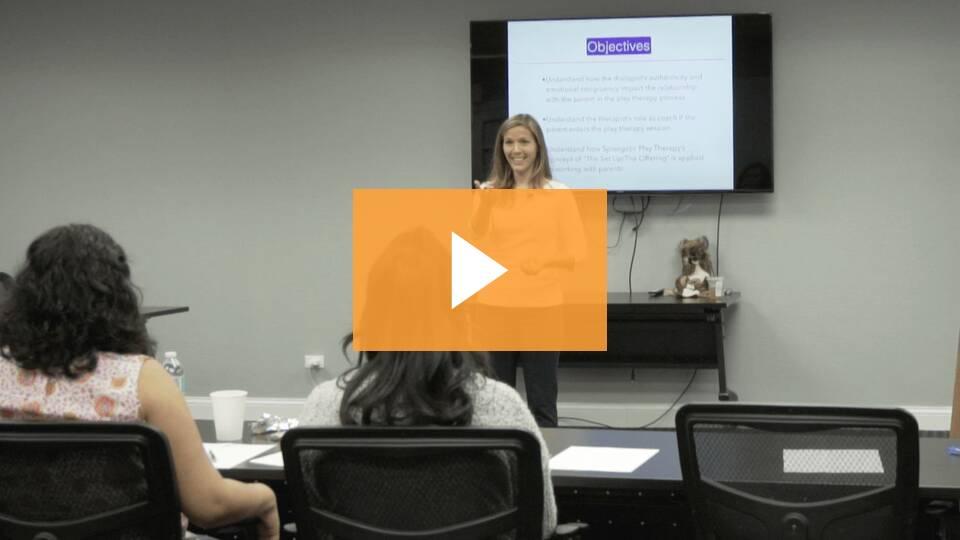
In this thought-provoking yet practical workshop, participants will explore what it really takes to partner with parents. They will have the opportunity to understand how to have a successful intake session setting the stage for a higher level of investment and commitment, how to communicate to parents so that they understand what play therapy is and how it works, how to translate what is happening in the playroom so that parents understand how the goals are being worked on, what to do with resistant parents and what to do when parents just want to drop their child off to be "fixed".
Through new skills, insights and a framework rooted in relationship theory, therapists are guaranteed to leave feeling inspired to work with parents.
This course helps play therapists strengthen their work with parents so they can:
- Get More Clients
- Understand the Parent's Brain
- Be More Authentic with Parents
- Have Successful Parent Intakes
- Level-Up Their Parent Coaching Skills
 Please see course details below. For a list of all available products, please go here.