

- Completed or enrolled in a Master’s Degree (or equivalent) program in counseling, social work, or education
- Previous experience working with children and families (required)
- Basic understanding of play therapy and play therapy skills (required)
-
 "The Intro to SPT class is the best class I have ever taken. There is no better training for counselors! I have a deeper understanding of the process and how to help children in the playroom. It has given me a whole new perspective and changed my life both personally and professionally. Being authentic allows you to be free. There are just no words to describe it!" -Nancy Asher The Online Introduction to Synergetic Play Therapy® is a 22-hour course that takes you on a journey to explore the neuroscience behind what is happening in the play therapy process, how to repattern a child's nervous system, and what it means to become an external regulator in the playroom. You will also learn how to effectively work with caregivers and what it means to create a neuroception of safety allowing both the child and the caregiver to have a deeper integration. And if this wasn't enough, you will come to understand the magic of aggressive play, sand and art from the perspectives of nervous system regulation, attunement, attachment, mindfulness, and authenticity. You'll learn all this while also how to avoid burnout and compassion fatigue. Come discover what showing up in the playroom truly means and explore what is happening in the play therapy process, how change occurs, and ultimately what it takes to help children heal at profound levels. And the best part is, you get to be you on the journey! Curious what this class is all about? Get the details here. And, check out what past students have to say Online Introduction to Synergetic Play Therapy® Prerequisite Training:
 -
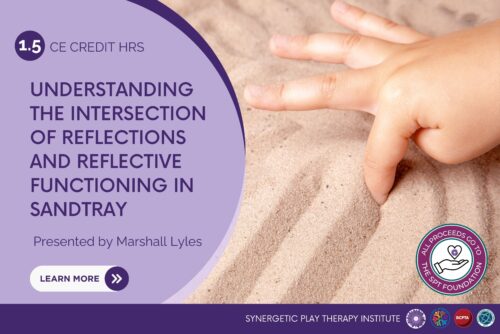 Sandtray therapy prominently features the art of reflecting. In fact, it may be the therapy skill most associated with the craft. However, we can become so accustomed to the language of reflecting that we can lose contact with its intent. In this course, you will explore the skill of reflecting through the lens of the attachment theory concept of reflective functioning. Marshall Lyles will walk you through examples honoring this intersection through use of the sand tray. Scroll down for all of the course details!
 -
 Every therapist has been there – in a session with a child who doesn’t want to come in the room, a child who doesn’t want to do the task, a child who only wants to avoid the issue. This course explores what to do when a child client’s language and behavior say “no.” Join us as we explore resistance- what it is and what it is not. This course will further explore emotional avoidance and flooding as components of resistant behaviors.
 -
 Aggression and death are common parts of the play therapy process, yet many therapists don’t have a clear understanding of what to do and how to facilitate intensity. This can lead to inadvertently promoting aggression and low brain disorganization. It can also lead to the therapist feeling beat up, exhausted, and hyper-aroused, ultimately impacting their ability to stay attuned, remain present, and find inspiration in this field. Enter Synergetic Play Therapy! Through an SPT lens, and a heavy dose of neuroscience, this 2-hour course helps therapists learn how to use play in a way that supports regulation – their own and their client’s! See course details below.
 -
 From the dad with doubts to the mom with mixed emotions, not all parents are sold on the idea of play therapy. The resistant parent is a parent who may have questions, shame, or confusion about the process. This course explores how to encourage parental understanding of the power of play and why it’s a key step in helping children heal.
 -
 This course supports play therapists as they learn about setting boundaries from a neurobiological perspective, keeping the child’s brain and nervous system activation in mind! Drawing from Interpersonal Neurobiology and Synergetic Play Therapy, participants will learn how to set boundaries without shaming the child or stopping the child’s play, allowing for deeper integration and connection. Working with emotional flooding (the child’s and the therapist’s) will also be explored. Please scroll down for course details.
 -
 From the dad with doubts to the mom with mixed emotions, not all parents are sold on the idea of play therapy. The resistant parent is a parent who may have questions, shame, or confusion about the process. This webinar explores how to encourage parental understanding of the power of play and why it's a key step in helping children heal.
 -

2024-2025 Synergetic Play Therapy® Certification Program
Please use this product to finalize your registration for the 2024-2025 Synergetic Play Therapy® Certification Program. If paying before or by the Early Bird deadline, you may use the coupon code you were provided via email at checkout to apply your discount. The final payment deadline for this program is June 28, 2024. To select your payment plan option, please use the dropdown menu below to choose your first, 3.5 Day Learning Retreat Online Location. (By selecting your virtual retreat location you are committing to the same location for both program learning retreats.) Your selection will finalize your registration of this program and your pricing option. *Please note: All pricing options will be displayed in USD at checkout. See details below. -
 In today’s digital era, children’s play has expanded into new realms, where they engage, connect, and communicate in transformative ways. To support young clients effectively, play therapists must understand and embrace the evolving world of digital play. This insightful course with Dr. Rachel Altvater explores how the digital landscape shapes children’s engagement, self-expression, and identity. Starting with a reflection on your own perspectives about digital native culture, you’ll dive into how digital environments influence children and adolescents, equipping you to meet them where they are. Through practical strategies, you’ll learn to connect with clients in their digital spaces, foster meaningful therapeutic relationships, and seamlessly integrate digital tools into your play therapy practice. The session also examines the vital role of digital identity, uncovering how this space serves as more than entertainment—it’s where young clients form relationships, build resilience and navigate their world. By the end of this course, you’ll walk away with fresh insights and actionable techniques to strengthen the therapeutic alliance, deepen connections, and achieve meaningful outcomes with the digital natives you serve.
 -
Out of stock
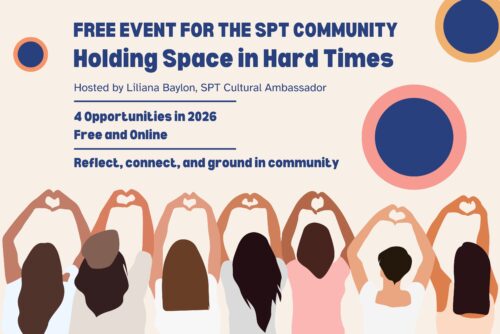
Registration CLOSED for the August 5th Live Webinar
Stay tuned for the November 18th offering!
Holding Space in Hard Times is a support circle for mental health therapists navigating the emotional toll of current events, violence, injustice, political unrest, and collective grief. As therapists, we are trained to hold space for others, but many of us also carry personal sorrow, burnout, rage, fear, and fatigue in response to the events unfolding in the world. This live webinar series offers a space to pause, ask questions, and be held in return. It is not supervision or consultation. It is a place for community care. Join the Synergetic Play Therapy Institute's Cultural Ambassador, Liliana Baylon, as we reflect together on how the current climate impacts our minds, bodies, and clinical work, name what often goes unspoken in therapy spaces, and practice grounding and cultural humility. Through connection and honest conversation, we witness each other without the pressure to fix or perform. This space invites you to come as you are, to release what you can, and to leave feeling more connected and less alone! 2026 Holding Space in Hard Times Dates:- February 25, 2026, 11am-12pm Mountain Time (Denver)
- May 6, 2026, 5pm-6pm Mountain Time (Denver)
- August 5, 2026, 11am-12pm Mountain Time (Denver)
- November 18, 2026, 5pm-6pm Mountain Time (Denver)
-
 Sibling rivalry is a common phenomenon in family systems and thus a common reason siblings are brought to play therapy! Have you ever wondered how to support siblings in play therapy? Do you work with them individually, together or with the entire family system? Do you take a non-directive or directive approach? When they are in the room together, what exactly do you do? This webinar will answer these questions and more! You will walk away with a better understanding of how best to support siblings in play therapy, along with creative ideas as to what to do when they are in the room together!
 -
 Lisa Dion and Dr. Robert Jason Grant, creator of AutPlay Therapy, discuss what Sensory Processing Disorder is, how to begin to understand it in the context of play therapy, and offer helpful suggestions for therapists to get started.